When Should You Upgrade from a Filling to an Inlay/Onlay?
When to Upgrade Your Filling to an Inlay or Onlay
Most people are familiar with dental fillings. Maybe you’ve had your fair share of cavities, or perhaps you’ve had to take your child to an appointment for a filling. For years, this has been the go-to solution for minor tooth decay. But what happens when the damage is too significant for a standard filling, yet not severe enough to warrant a full crown? This is where inlays and onlays come into play. Often referred to as “partial crowns,” these restorations are a middle ground between a simple filling and a major reconstruction. Learn more about when to upgrade to an inlay and how you can properly maintain your restoration.
What Are Fillings, Inlays, and Onlays?
Before you can decide when to upgrade to an inlay, you need to understand the differences between a filling vs. an inlay/onlay. Here is a basic overview of each restorative solution:
Dental Fillings
Dental fillings involve removing tooth decay and immediately filling it in with a soft material like resin. Your dentist can shape it while it’s still pliable, then the material hardens to match the rest of your tooth. Fillings are best suited for small-to-medium cavities where the surrounding tooth structure is still strong and intact.
Inlays
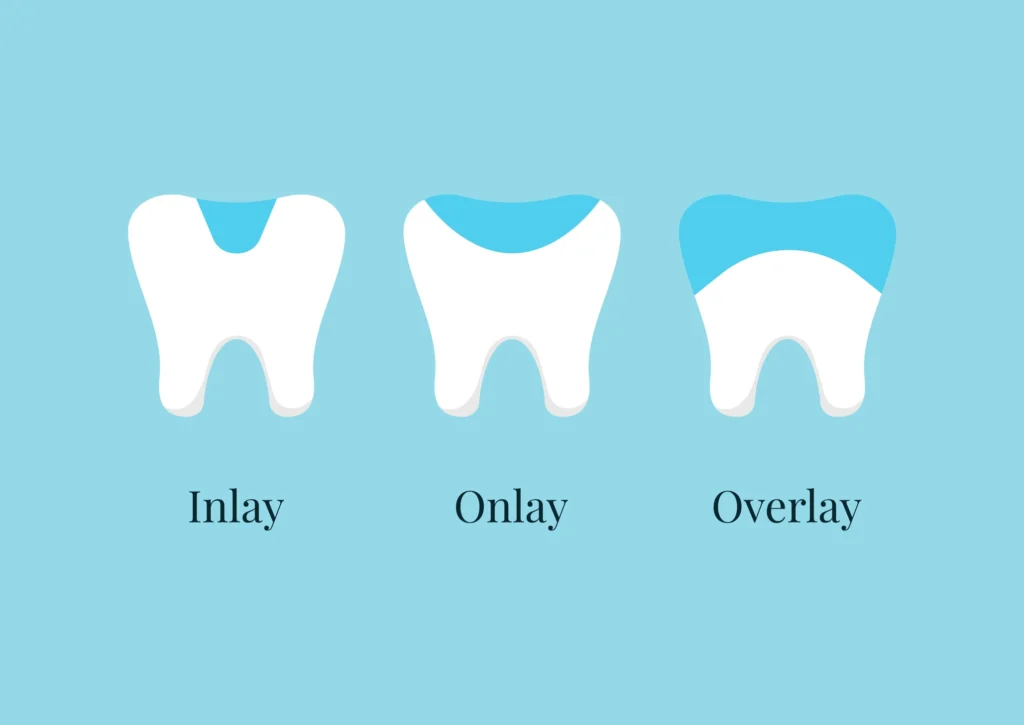
Inlays are solid, custom-made pieces fabricated in a dental lab (or using in-office CAD/CAM technology) to fit the specific shape of your cavity. An inlay fits securely inside the remaining tooth—think of it like a puzzle piece that slides perfectly into the center of the tooth.
Onlays
Onlays are similar to inlays but cover a larger area. If the damage extends to one or more of the tooth’s cusps, an onlay is used to cover and protect those chewing edges. Because they cover the top of the tooth, they are often called partial crowns. However, unlike a full crown, they do not require removing healthy enamel from around the entire base of the tooth.
Signs You Should Upgrade From a Filling
Fillings don’t last forever. If your previous restoration is reaching the end of its lifespan, an inlay or onlay could be the logical next step. Here are a few signs that your current filling should be upgraded:
- Large Fillings—If your filling takes up more than half of the tooth’s chewing surface, it can exert too much pressure and eventually fracture the natural walls of your tooth.
- Recurring Decay—If you get a cavity underneath or around an existing filling, drilling it out and placing a larger filling often leaves too little natural tooth structure to support the repair.
- Wear and Tear—General wear and tear is also a good reason to switch to an inlay or onlay. Composite fillings are known to wear down and stain over time.
- Broken Cusps—If a piece of your tooth breaks off around a filling, patching it with more filling material is rarely a long-term solution.
Why Choose Inlays or Onlays Over Fillings?
The main reason why dentists opt for dental inlays or onlays over fillings is structural integrity. Standard fillings are effective for plugging gaps in the teeth, but they don’t necessarily strengthen them. Inlays and onlays are bonded to the tooth with high-strength materials that actually pull the tooth structure together. This reinforces the tooth rather than just filling a void. Get to know the additional benefits of inlay/onlay restorations:
- Longevity—While a large filling might last five to 10 years, a well-maintained porcelain inlay/onlay can last 20 years or more.
- Conservative Treatment—Full crowns require dentists to remove parts of the healthy tooth, whereas onlays preserve as much of your natural tooth as possible.
- Hygiene—Onlays are often easier to clean than full crowns, which can sometimes irritate the gum line.
- Aesthetics—Modern porcelain inlays and onlays are color-matched to your natural teeth for a seamless look.
What to Expect During an Inlay Procedure
Getting an inlay or onlay is slightly more involved than getting a filling, usually requiring two visits unless your dentist uses same-day CEREC technology. The general process looks like this:
- The First Visit—At your initial appointment, your dentist will remove the old filling and any decay. Next, they’ll clean and reshape the tooth as needed. Afterward, they can take an impression or digital scan of the area and insert a temporary restoration.
- The Lab—Your dentist will send the impressions or scans off to the lab, where technicians will create your custom restoration.
- The Second Visit—Once your inlay or onlay is ready, you’ll return for a follow-up. Your dentist will place the permanent inlay or onlay, check the fit, and permanently bond it to your natural tooth.
Will My Insurance Cover Inlays and Onlays?
Inlays and onlays sometimes cost more upfront than standard fillings. However, when you factor in longevity, they are often more cost-effective. Replacing a large filling every few years adds up, and if that filling eventually causes the tooth to break, you may end up paying for a root canal and a crown. Insurance coverage varies and depends on whether your plan classifies inlays as basic services. Many insurance providers cover 50% or more of the cost, but always check your specific plan or ask your dental office about pre-authorization. It pays to know what your out-of-pocket expenses will be before weighing the pros of inlays vs. fillings.
Tips for Maintaining Your Restoration
While inlays and onlays are incredibly durable, they are not indestructible. Treat them with the same care you give your natural teeth. Brush twice a day and floss daily. Beyond these standard hygiene practices, you should also:
- Watch Your Diet—Avoid chewing on ice, hard candy, or pens, which can crack porcelain restorations.
- Wear a Night Guard—If you grind your teeth at night (bruxism), ask your dentist for a custom night guard to protect your smile.
- Schedule Regular Check-ups—See your dentist every six months so they can check the margins of the restoration and ensure it’s still secure.
Making the Right Choice for Your Smile
While a filling might seem like the quicker, cheaper option right now, upgrading to an inlay or onlay provides you with additional protection and durability. Not sure which is right for you? Talk to the team at Associates for General Dentistry. Our Arlington Heights, IL dentists will be glad to recommend the best approach. Contact us today to schedule your appointment.